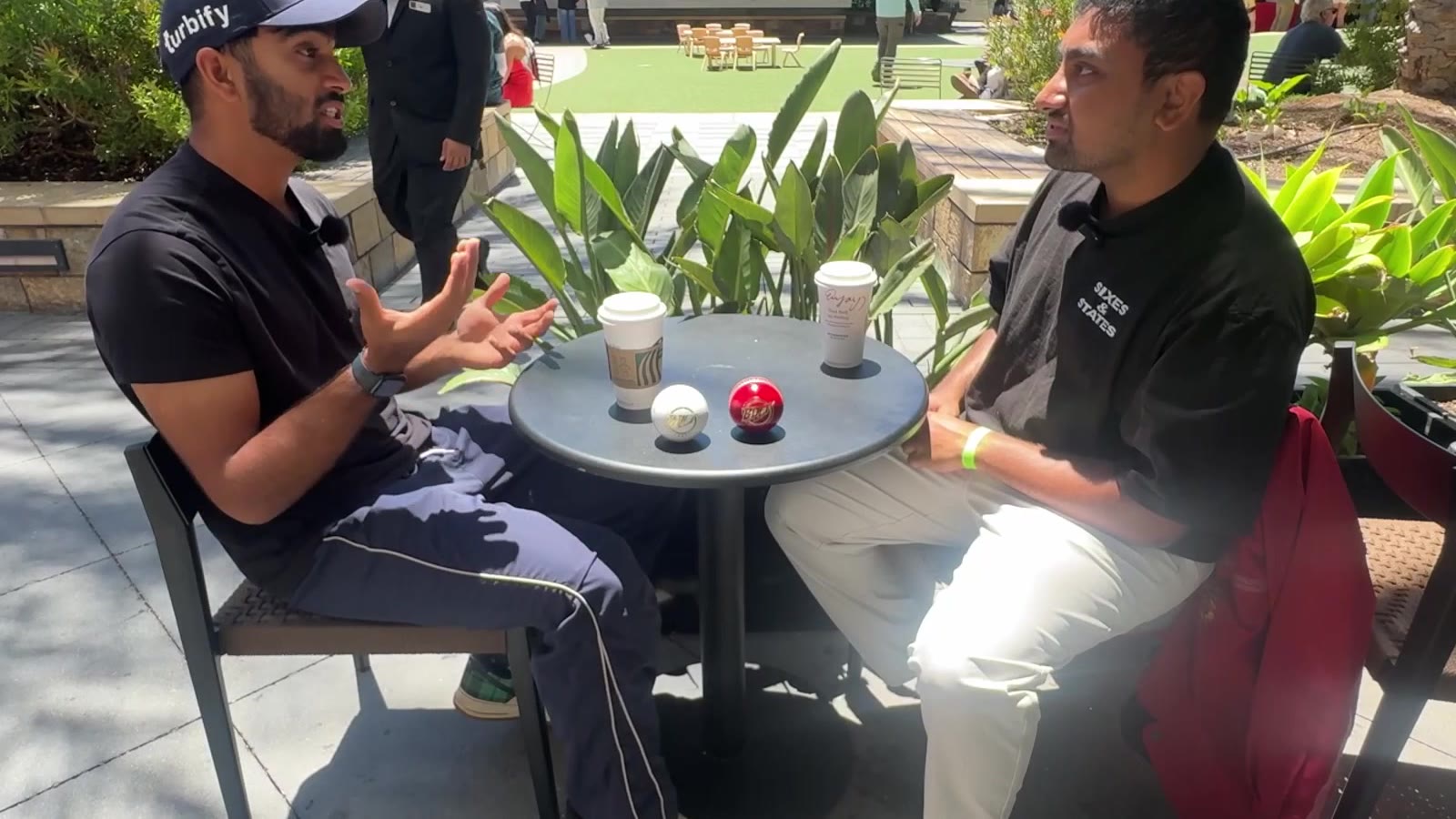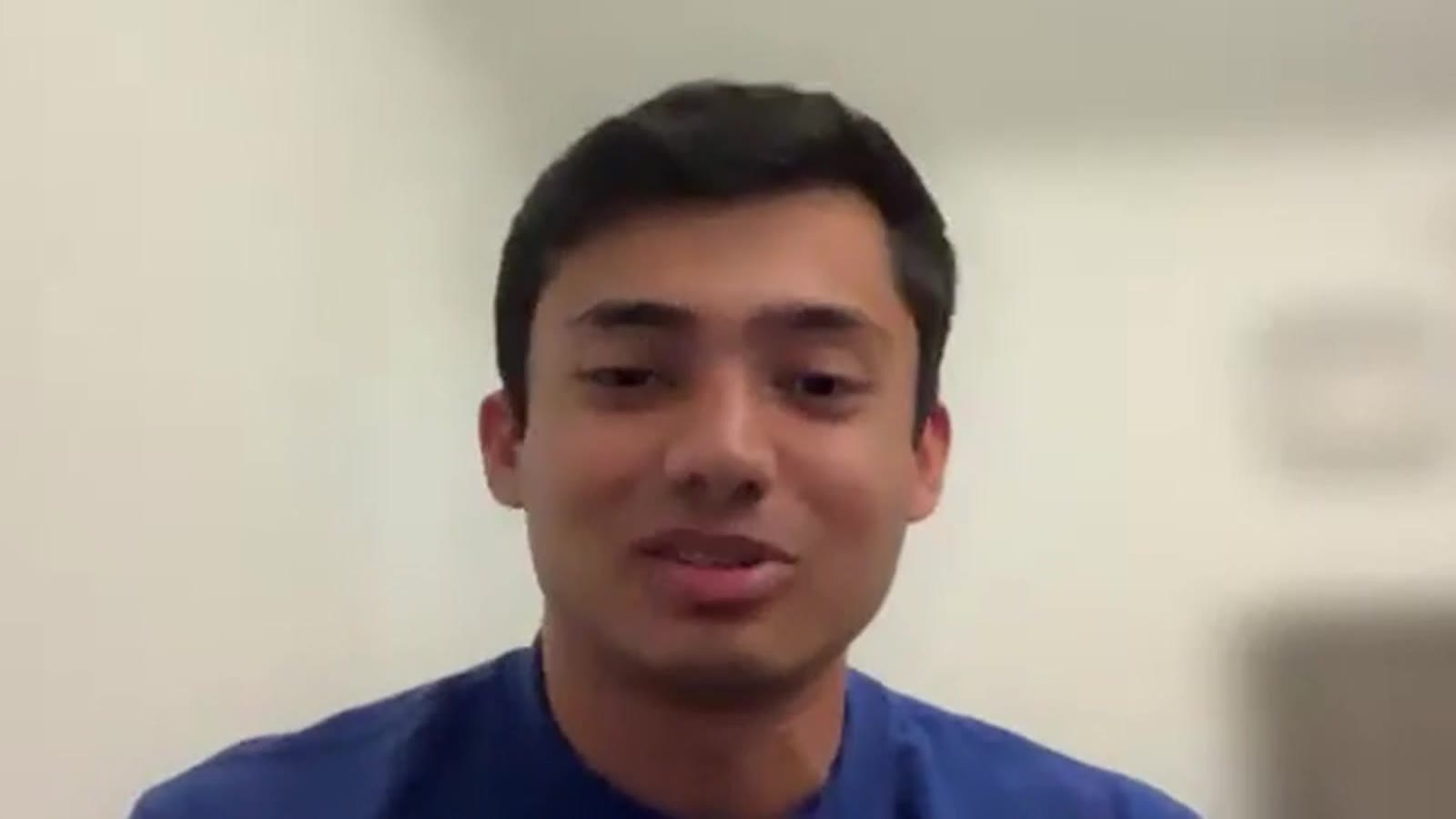
More from Sixes and States. This feature comes from Amal Bhatnagar’s interview with Rushil Ugarkar for Sixes and States. Watch our full interviews on Sixes and States on YouTube, and follow @sixesandstates on Instagram and TikTok.
In the 2025 Major League Cricket final, MI New York handed Rushil Ugarkar the last over with Washington Freedom needing 12 runs to win. He gave up six, dismissed Glenn Maxwell and was named Player of the Match, as DreamCricket USA reported.
Cricket calls his job death bowling. Baseball would call it closing: the last overs, the most pressure, the specialist the team trusts when the game is on the line.
That night ended a long wait. “I didn’t have anything for 10 years,” he told Sixes and States. “I was literally a nobody.”
Now a regular for MI New York and the U.S. national team, he talked in a September interview about what the breakout changed, what it didn’t, and what American cricket needs next.
Born in St. Louis, raised on cricket
Ugarkar was born in St. Louis and grew up in Bengaluru, in India, where cricket is the biggest sport. “I was actually pretty decent at it,” he says. “I love the game.”
He moved back to the U.S. for his studies, and his parents followed. His father moved jobs, he says, and his mother left family behind. “The amount of sacrifices they’ve made for me is unreal,” he says. His parents ask for one thing in return: “just do well in cricket.”
Having played in both countries, he says India simply has more players, and “the biggest difference is the facilities and the way, you know, the system is growing from under 12 to under 19 to senior cricket.” He expects the U.S. to catch up. “I feel like slowly, slowly, it’s going to match up and be the same one day,” he says.
Growing up in the minor leagues
His American career started in Minor League Cricket, the nationwide league that sits below MLC. “I pretty much grew up in the system,” he says. “I’ve played since year one.”
What helped most was who he played alongside. “I get to rub shoulders with some of the guys that are playing Major League,” he says, veterans who had “played so much first class cricket, state cricket and stuff. So it definitely helped me learn a lot.”
One opportunity led to the next. After a strong run in the minor league, he texted to ask if he could come to India as a net bowler, cricket’s version of a batting-practice pitcher, for the Indian Premier League. They said yes. He still spends about three months a year there, since there is little cricket for him at home in winter. “It’s definitely helped my progress over the last three years,” he says. Back in Bengaluru, one of the batters he bowled to was Rohit Sharma, the longtime Mumbai Indians captain.
Year two: sticking to the plan
The breakout answered his biggest question. “When you’re first getting on to that level, the first question you ask yourself is, am I going to be able to sustain at this level for a very long time?” he says. “And I think that question was answered for me last year.”
In 2026 the question changed. “At this moment, it’s more how can I continuously perform for my team?” he says.
MI New York gave him the ball game after game, and he took 12 wickets in 11 games, according to Statz. In T20 cricket, each team bats for up to 20 overs of six deliveries, and a bowler can bowl four at most. Ugarkar credits his variations, “I have a lot of change ups as well,” and one piece of feedback above all: “I’ve been sticking to the plan pretty well.”
That means accepting the hits. “Sometimes batters are going to play good shots as well,” he says.
Everyone knows the slower ball is coming
His signature delivery is the slower ball, the cricket version of a changeup. Teams have analysts and video on every bowler, so there are no secrets. “Everybody knows I’m going to bowl a slow ball,” he says, “but you still have to hit the slow ball if I bowl perfectly.”
His edge is preparation, and “the planning has to be really, really top notch,” he says. The night before a game, he watches video of the opposing batters, but not their highlights. “I typically don’t look at the boundaries at all. So I look at how they get out,” he says. Then he pictures each dismissal. “I think that’s one thing that’s helped me, especially in the last two years, just visualizing.”
Right before he steps onto the field, he goes down on one knee and says a short chant to himself. What he says stays private.
At home in Dallas, he aims to bowl about four times a week and follows the U.S. team’s gym program.
Learning from the players he watched as a kid
Asked by Sixes and States about his role models, he named two Australians. “Growing up, I was a big fan of Shane Watson. And then once he retired, I started looking up to Pat Cummins,” he says. Outside cricket, it is the soccer star Ronaldo, “mainly because of his work ethic.”
Now he is coached by some of the players he grew up watching, among them Sri Lankan great Lasith Malinga and New Zealand’s Mitchell McClenaghan. “I watched these guys growing up when I was a kid in India,” he says. He texts them in the offseason for feedback, and “they’re always, you know, very helpful.”
At MI, he works with Mark Boucher, the former South Africa wicketkeeper, whom he calls “one of the best coaches I’ve worked with.” He isn’t shy about asking questions. “From what I’ve seen from these coaches, they’re usually very happy if you come and ask them questions,” he says. “It also shows that you know, you’re willing to learn.”
Wearing the USA shirt
Ugarkar made his one-day international debut for the U.S. in October 2025, after USA Cricket’s first call-up. The debut came in Dubai, one of his favorite places to play. “I had a lot of fun in Dubai. I did well there as well,” he says. He has since toured with the team to Nepal.
“I remember that we played against Nepal, they had a massive crowd,” he says. “So obviously the opposition, but I felt energized playing in front of them.” His roommate on that trip was Sanjay Krishnamurthi, a U.S. teammate he has known since they were about 12. “It’s good to have someone like him around the cricket system here,” he says.
He is optimistic about the team. “We’re moving in the right direction,” he says. “I think for now, our goal is to get to the ODI World Cup,” the 50-over championship, with the Olympics a year later.
The part nobody posts
The travel looks glamorous online. During his first stint in the UAE’s ILT20 league, he did not get a single game and spent about 45 days mostly in his room. “During the day, I’m awake, and my parents are asleep, friends are asleep. So it’s really tough,” he says.
He estimates he has been home for about 60 days in the last two years. This summer he brought his parents along. “I even took them to San Francisco to watch us play,” he says. When MI New York was knocked out, he stayed a few extra days to turn it into a family vacation.
Bad days come with the role. “I think you’re gonna fail more than you succeed, to be very honest, in terms of cricket,” he says. His instinct is to go quiet, but Boucher pushed him to talk things through. “I try figuring out if I talk to people, do I actually feel better? I do.” By the next morning, “that day’s gone behind me.”
What comes next for American cricket
Ask what the U.S. needs, and he starts with facilities. Professional cricket is played on natural grass pitches, known as turf. “If you want to be training on turf the whole year, I think that plays a massive factor,” he says.
Then competition. “We just need to be playing a lot more against, you know, full member nations,” he says, the 12 countries at the sport’s top tier. “When you get that exposure against playing against the best in the world, I think you automatically start getting better.”
The biggest stage is less than two years away, when cricket returns at the 2028 Olympics in Los Angeles. His list for it is short. “Get stronger, get quicker,” he says. “I need to get my pace up as well.”
He has bet his future on the game. He is still enrolled in university, with his degree unfinished. “I think that’s one of the biggest risks I’ve taken so far,” he says. He has seen “a lot of people drop out of cricket right after you’re done with college,” and his message to the American kids coming up behind him is the bet he made.
“If you work hard enough and you trust yourself, I think you’d be surprised how far you can go,” he says.
As for his own legacy, he knows what he wants: “I’d like to be someone who’s remembered through cricket in America more than anything.”
Follow Rushil Ugarkar and MI New York at minycricket.com, and the U.S. men’s team at usacricket.org.
Sources
All quotes from Rushil Ugarkar come from his interview with Amal Bhatnagar for Sixes and States, recorded on Zoom on Sept. 3, 2026. None are taken from other publications. Filler words were trimmed without changing meaning.
- Peter Della Penna, DreamCricket USA, “From zero to hero: How Rushil Ugarkar went from benchwarmer to death-bowling iceman for 2025 MLC champs MI New York”, July 14, 2025. The 2025 final, his 2 for 32 and Player of the Match.
- SportsMax, “Ugarkar defends 12 in final over as MI New York defeat Washington Freedom by five runs to claim second Major League Cricket title”, July 2025. The 12 runs needed and Maxwell’s wicket.
- Statz, “Rushil Ugarkar”, accessed Oct. 18, 2026. 2026 MLC wickets.
- USA Cricket, “USA Cricket announces squad and schedule for ICC CWC League 2 series in Dubai” (press release), Oct. 24, 2025. First call-up.
- Wikipedia, “Rushil Ugarkar”, accessed Oct. 17, 2026. ODI debut on Oct. 26, 2025 against Nepal.
- ICC, “Dates confirmed for cricket’s return to the Olympics”, July 16, 2025. LA28.