More from Sixes and States. This feature comes from Amal Bhatnagar’s interview with Aaman Patel for Sixes and States. Watch our full interviews on Sixes and States on YouTube, and follow @sixesandstates on Instagram and TikTok.
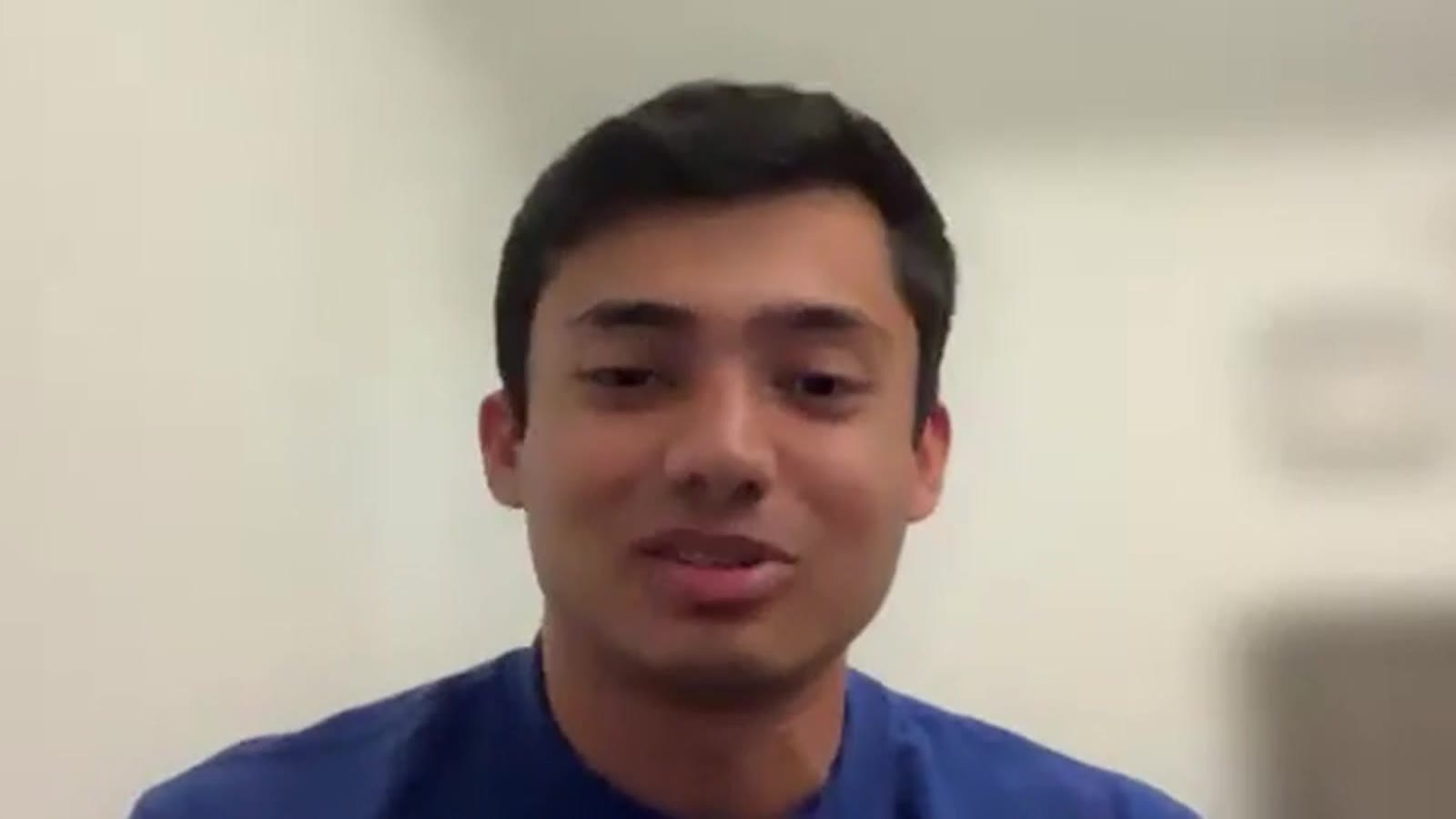
Aaman Patel’s first broadcast took three things. “It was literally a picnic table, a phone tripod, a Facebook Live,” Patel told Sixes and States. “And you speak into the phone.”
His setup today looks very different. “Now you’ve got people in your ear and directors and producers and there’s replay and Hawk-Eye and all that stuff,” he says. Hawk-Eye is the ball-tracking system broadcasters use to replay the path of a delivery.
The job at its heart is the same. “At the end of the day, it is just commentary, having a conversation and trying to tell the story of the game to an audience back where they’re watching,” he says.
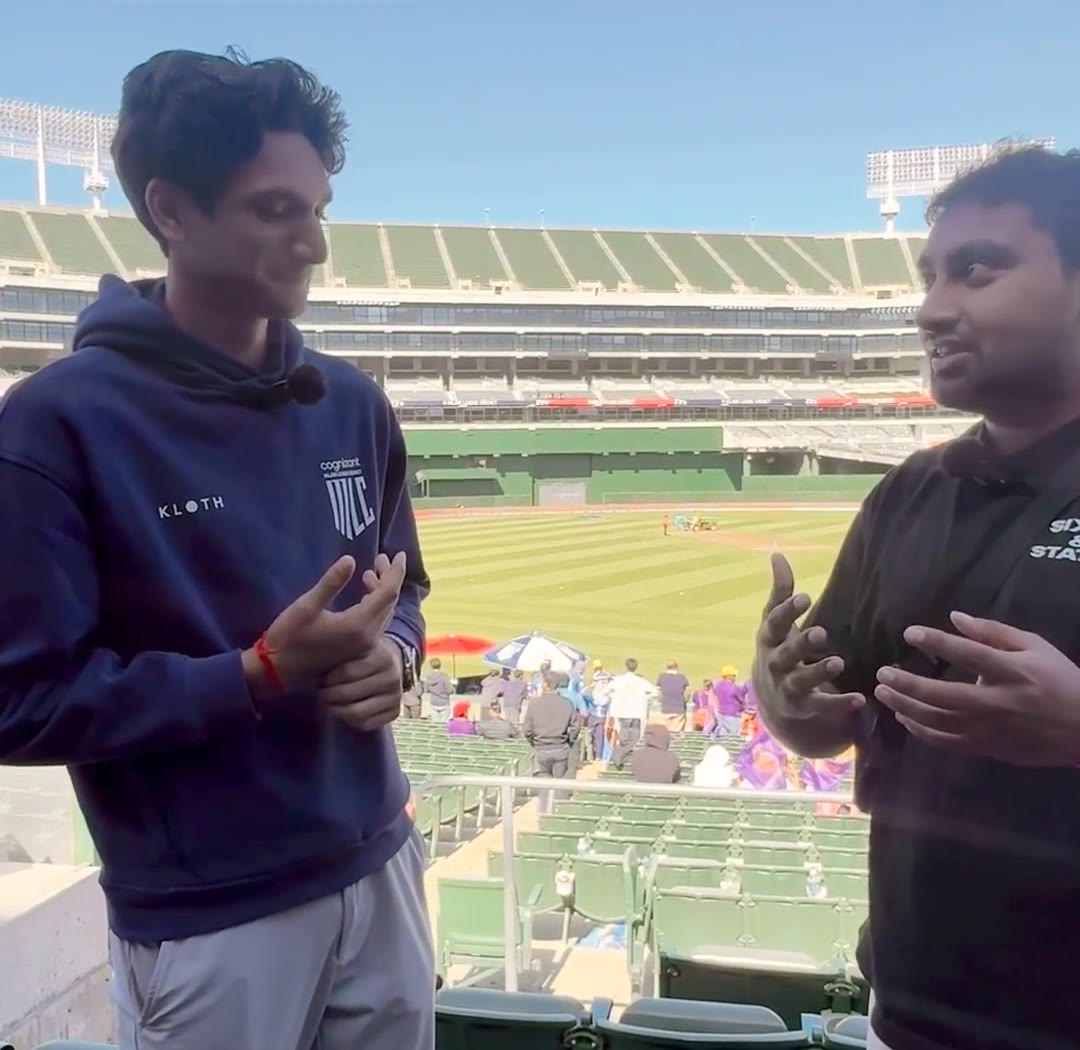
Patel called the first season of Minor League Cricket in 2021 and his first Major League Cricket (MLC) game in 2024, according to a UNC-Chapel Hill profile. Broadcasting a sport many Americans are still learning means explaining it without talking down to anyone. He talked about how he does that in an interview with Sixes and States in the stands of the Oakland Coliseum in June, before the San Francisco Unicorns played the Seattle Orcas.
Cricket ran in the family
Cricket was in Patel’s family before he was. His father played, and finished a cricket match before Aaman was born. “I think it was always ingrained, right, with family,” he says.
He loved sport growing up and “always wanted to be around it. So I always thought, what’s the way for me to get involved? And broadcast always seemed to be that kind of avenue for me.”
The chance came during the COVID-19 pandemic, when he was 17 or 18. His coaches called: they were running a cricket tournament and needed a commentator. He had just started a podcast, and the tournament became his first call. “And from that point, it just kept carrying forward, which has been really cool,” he says.
That podcast connected him to the sport’s community, according to UNC, and the first call was a youth game streamed on Facebook Live.
From the minor league to the big stage
The next step came in 2021, when Patel called the first season of Minor League Cricket and did play-by-play for a USA Cricket game, according to UNC. Minor League Cricket is the development league for MLC, with 26 teams split between Atlantic and Pacific conferences, according to Wikipedia.
He transferred from Wake Technical Community College to UNC’s Hussman School of Journalism and Media, where he directed, produced and worked as an on-air analyst for student sports and news shows. In 2024 he called his first MLC game.
MLC, founded in 2023, plays T20, a short format in which each side bats for up to 20 overs of six deliveries. A game lasts around three hours. Patel’s work has also taken him to Barbados for the ICC Men’s T20 World Cup and to Argentina for men’s and women’s World Cup qualifiers, UNC reports.
Asked how the Facebook Live days compare with today, Patel reaches for a British phrase for two completely different things. “It’s chalk and cheese, right? It’s completely different,” he says.
Speaking American sports
The biggest challenge in bringing cricket to an American audience starts with the vocabulary. “I think first off, understand that cricket’s terms are really weird, right?” Patel says. “Cow corner, not a normal phrase. Point, not a normal phrase.”
Both name places on the field where fielders stand. “So understand that that is a hurdle,” he says.
His answer is to meet fans where they already are. “There is a sports culture, right, behind sports fans. So they understand certain processes, so you can always find sports language,” he says.
Patel draws on everything else he watches. “For me, I’ve been blessed to watch so many different sports and have so many different influences from there that I’m able to put that into words into the cricket broadcast,” he says.
Every name, said right
Patel takes care to pronounce every player’s name the way the player says it. That comes from his own experience. “I grew up in the States, not many folks said my name, right? It didn’t bother me,” he says.
But in cricket, names come from everywhere. The U.S. team’s Shadley van Schalkwyk, for example, was born in Cape Town, South Africa, according to Wikipedia. If Patel wants to build a relationship with him, he says, “I should probably get to know how to say his name, right?”
“You always want to be professional, want to be correct,” he says. “If I have to spend a couple extra hours trying to figure it out and nail it, then absolutely, I’ll try to figure out and nail it.”
The why behind the numbers
That preparation goes beyond names. For an MLC broadcast, Patel says, “they do have that stats pack, which is brilliant.” He does his own work too. Before a season, he spends “anywhere from 24 to 48 hours, not consecutively,” watching film and stats.
The goal is to know the numbers and to explain them. “Because I think if you just start spewing numbers, it can get lost. And it’s just like, okay, numbers are numbers,” he says. “But if you’re able to say, okay, why is this important? Or why has this happened?”
That, he says, is where a commentator becomes valuable. “For me, that’s what I’m trying to do with all my prep: find out the why of what.”
Take a beat
His biggest fear on air, he says, is not being able to hold his excitement in. He thinks back to one of his first broadcasts: the final ball, three runs needed, and a finish that came down to the last run.
“I just screamed on air, didn’t really say anything,” he says. It is a moment he keeps in mind. “So take a beat, take a pause and find a way to actually say what’s happening.”
Minor league, major win
Patel has watched American cricket grow since the start. “The changes have been astronomical, for sure. There’s so much room to still grow,” he says.
His pick for the biggest win is the minor league. “I think Minor League Cricket has been the biggest win in my book,” he says. “Major League is a great commercial product. And to me, that’s the result of all the hard work in Minor League, where you’ve built a domestic system where there’s 26 teams … and the best players in the country play.”
He points to the growth of players such as Saiteja Mukkamalla, born in Plainsboro, New Jersey, and Sanjay Krishnamurthi, born in Corvallis, Oregon, according to Wikipedia (Mukkamalla, Krishnamurthi). Both play for the U.S. now. “They’ve become fantastic talents to take it to an international stage,” Patel says.
Established national-team players are growing too, he says, such as U.S. captain Monank Patel and Auburn, Alabama-born spinner Nosthush Kenjige. “They have seen so much growth because they’re playing the best cricketers more often,” the commentator says.
An open invitation
Patel hopes to keep calling cricket around the world, including the growing stories of smaller cricket nations, according to UNC. His own message for American fans is simple.
“Check out cricket and watch American cricket. It’s so cool,” he told Sixes and States. “It’s great to be a part of and also get involved.”
The community, he says, is always trying to grow and spread the word. “It’s a great win for USA.”
Watch Major League Cricket and find the schedule at majorleaguecricket.com.
Sources
All quotes from Aaman Patel come from his interview with Amal Bhatnagar for Sixes and States, recorded in person at the Oakland Coliseum on June 27, 2026. None are taken from other publications. Filler words were trimmed without changing meaning.
- Caroline Daly, UNC-Chapel Hill University Communications, “Aaman Patel was born for cricket”, Feb. 3, 2026. His podcast, first Facebook Live call, 2021 Minor League Cricket season, Wake Tech transfer, student media work, first MLC game in 2024, Barbados and Argentina, plans to keep calling games worldwide.
- Wikipedia, “Minor League Cricket”, accessed Oct. 18, 2026. 26 teams, development league for MLC.
- Wikipedia, “Major League Cricket”, accessed Oct. 18, 2026. Founded in 2023, T20 format.
- Wikipedia, “Shadley van Schalkwyk”, accessed Oct. 18, 2026. Born in Cape Town, plays for the U.S.
- Wikipedia, “Saiteja Mukkamalla” and “Sanjay Krishnamurthi”, accessed Oct. 18, 2026. Birthplaces, U.S. national team.
- Wikipedia, “Monank Patel” and “Nosthush Kenjige”, accessed Oct. 18, 2026. U.S. captain; Kenjige born in Auburn, Alabama, left-arm spinner.